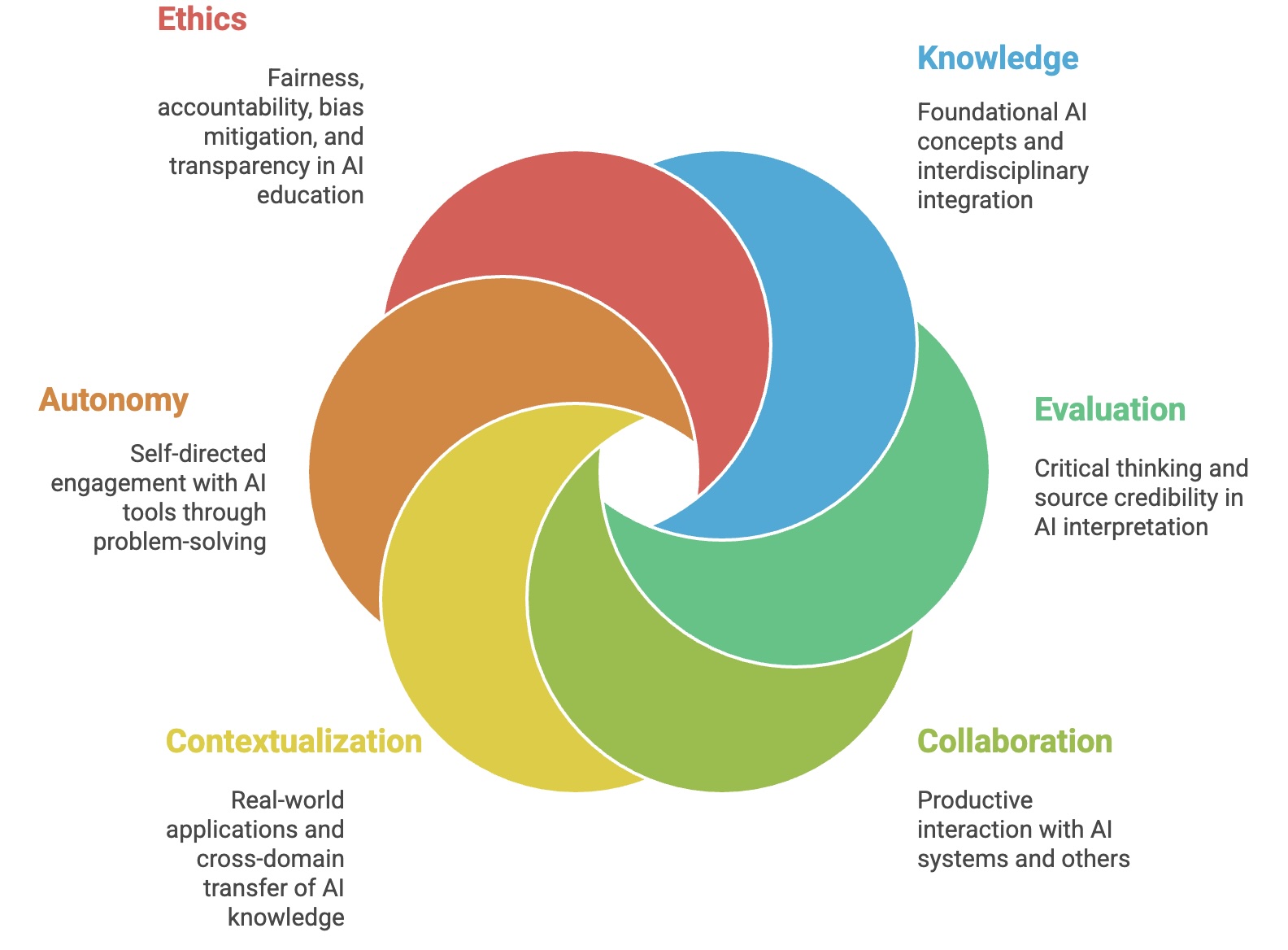
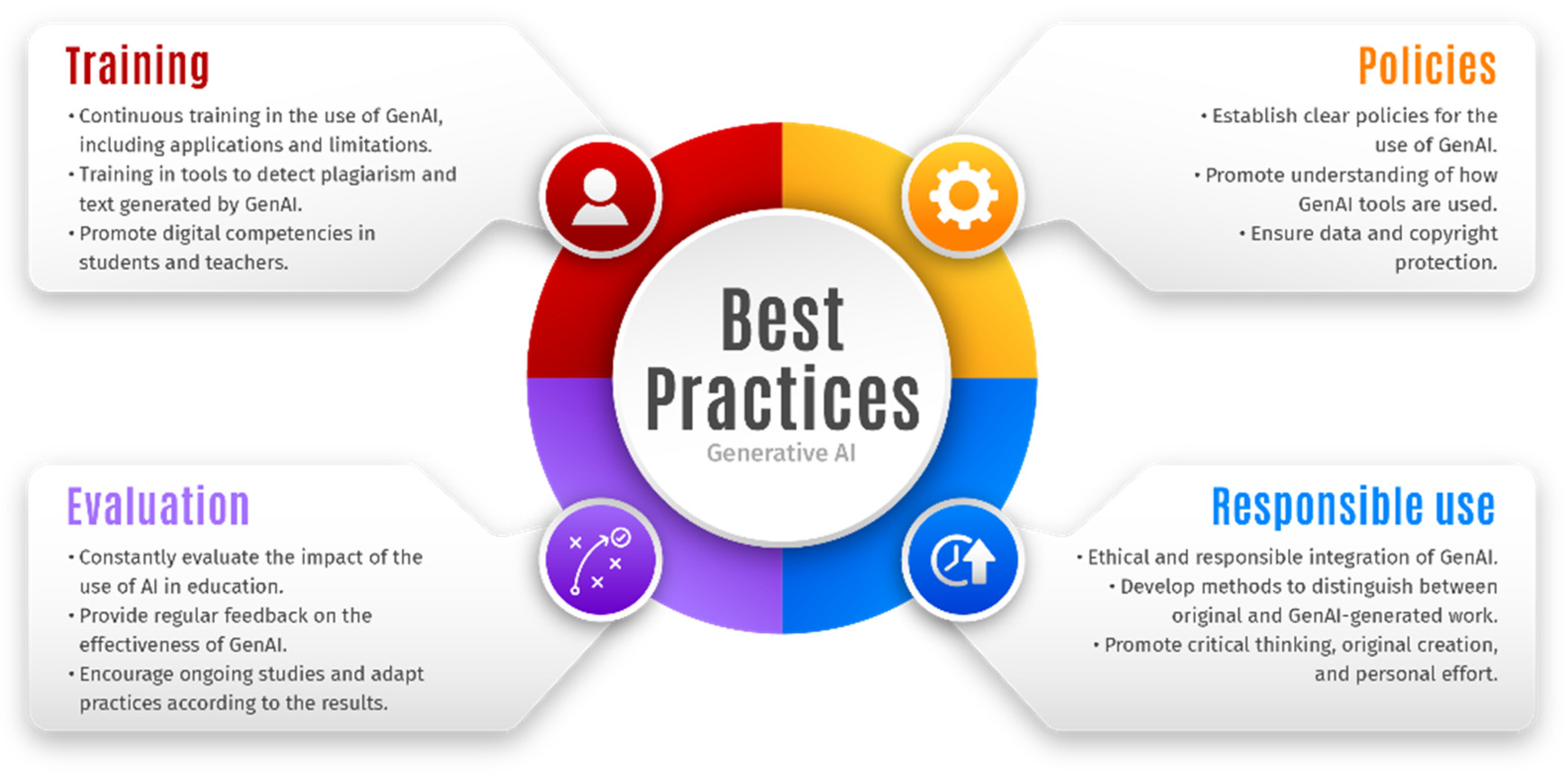
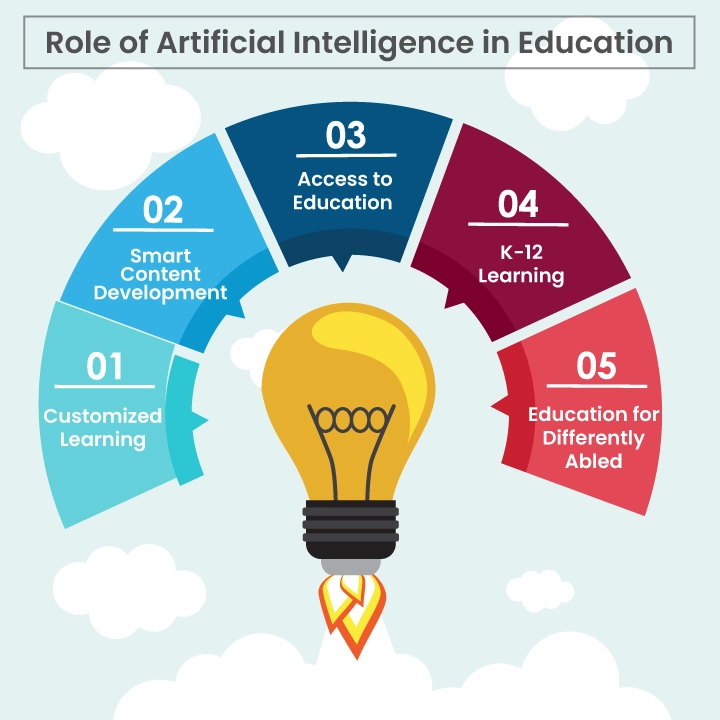
Generative AI can be a catalyst for innovation and inclusion across Barbados’ education system. By developing leaders who are ethical, informed, and forward-thinking, schools can harness the power of AI to foster creativity, enhance efficiency, and promote lifelong learning.
Educational technology should never replace the human teacher. Instead, it should amplify the educator’s ability to inspire, mentor, and guide students toward critical thinking and responsible digital citizenship.
As the world advances, Barbadian schools can stand as examples of how small island states lead responsibly in the Fourth Industrial Revolution—by ensuring that every digital innovation upholds human dignity and educational excellence.
The integration of Generative Artificial Intelligence (AI) in education must be strategic, ethical, and guided by institutional readiness. While the potential for enhanced teaching, personalized learning, and administrative efficiency is significant, success depends on leadership that aligns AI use with national education goals, data protection laws, and inclusive values.
For Barbadian secondary schools, this process should reflect the national Digital Strategy for Schools 2024–2029 (Ministry of Education, Technological and Vocational Training [METVT], 2024), which emphasises innovation, capacity building, and data-driven decision-making. This post outlines a structured Institutional Action Plan for implementing Generative AI at The Lodge School, demonstrating how educational leadership can operationalise digital transformation through policy, training, and ethical governance.
Action Plan Overview
Goal ~ To integrate Generative AI ethically and effectively into teaching, learning, and administration at The Lodge School by 2028.
Leadership Framework~ Guided by the ISTE Standards for Education Leaders (Equity and Citizenship Advocate; Systems Designer)
Implementation Timeline ~ 2026–2028
Monitoring Authority ~ Principal and ITC Committee, supported by the ITQAU of the Ministry of Educational Transformation.
Evaluation Tools ~ Annual review reports, staff surveys, student feedback, and AI usage analytics.
Policy Development and GovernanceObjective: Establish a formal AI Governance Policy outlining ethical use, data privacy, and accountability measures.
Key Actions:
Form an AI Policy Committee comprising administrators, teachers, parents, and student representatives.
Draft and ratify an institutional AI Ethics Policy consistent with the Data Protection Act 2019-29 (Government of Barbados, 2019).
Define acceptable AI use for academic and administrative tasks, including guidelines for citation of AI-generated content.
Require transparency statements for AI-assisted student work.
Leadership Role:
School leaders act as Systems Designers (ISTE, 2018) by creating a robust digital framework that balances innovation with legal and ethical responsibility. They model transparency by using AI ethically in administrative communication and decision-making.
Expected Outcome:
A documented, institution-wide AI policy that promotes ethical innovation and protects privacy.
2. Professional Development and Capacity Building
Objective: Empower teachers and staff with the knowledge and confidence to use AI responsibly and effectively.
Key Actions:
Conduct AI Literacy Workshops for teachers, focusing on prompt design, classroom applications, and plagiarism detection.
Host Leadership Clinics for department heads on AI evaluation and data ethics.
Partner with the MET and Erdiston Teachers’ Training College to integrate AI modules into professional development programs.
Establish a mentorship system where digitally proficient teachers coach peers.
Leadership Role:
The principal and ITC coordinator function as Learning Leaders, fostering a culture of continuous improvement (Fullan, 2020). By investing in teacher empowerment, leaders ensure that AI tools support pedagogy rather than replace professional expertise.
Expected Outcome:
A digitally competent teaching workforce that integrates AI into lesson planning and assessment with ethical awareness and confidence.
3. Infrastructure and Resource Enhancement
Objective: Upgrade digital infrastructure to support secure and equitable use of AI.
Key Actions:
Improve internet connectivity and bandwidth across campus, prioritising laboratories and classrooms.
Establish secure cloud storage compliant with national data protection regulations.
Procure licensed, education-friendly AI tools such as Google Gemini for Education.
Ensure that students with limited device access benefit from school-based digital loan programs.
Leadership Role:
Leaders collaborate with the MET’s ITQAU Division and private partners to secure funding for technological improvements. This fulfils the Equity and Citizenship Advocate standard by ensuring all students have equitable access (ISTE, 2018).
Expected Outcome:
Reliable and inclusive infrastructure that facilitates safe, institution-wide AI engagement.
4. Pedagogical Integration and Curriculum Alignment
Objective: Embed Generative AI applications within curriculum delivery to improve learning outcomes.
Key Actions:
Align AI-supported lessons with CSEC and Caribbean Vocational Qualification (CVQ) standards.
Pilot AI-assisted teaching units in English, Mathematics, Science, and Business Studies/Geography/History.
Develop cross-curricular projects that use AI tools for research, writing, and creative design.
Encourage student reflection on AI ethics through digital citizenship modules.
Leadership Role:
Leaders act as Visionary Planners, ensuring that AI integration enhances core learning goals rather than distracts from them (Holmes et al., 2019). They also facilitate interdisciplinary collaboration among teachers to promote innovation.
Expected Outcome:
Curriculum units enhanced by AI tools that promote creativity, problem-solving, and digital citizenship.
5. Community Engagement and Transparency
Objective: Build stakeholder trust and awareness through communication and collaboration.
Key Actions:
Host Parent Information Sessions to explain AI use, benefits, and data protection measures.
Publish annual AI implementation updates on the school website and in newsletters.
Invite feedback from the Parent-Teacher Association (PTA) and community partners on AI projects.
Involve students in awareness campaigns promoting ethical AI use and privacy protection.
Leadership Role:
Leaders act as Connected Communicators, ensuring transparency and participatory decision-making (ISTE, 2018). This builds community confidence and shared ownership of AI initiatives.
Expected Outcome:
Greater stakeholder understanding, trust, and collective responsibility for ethical AI use.
6. Monitoring, Evaluation, and Continuous Improvement
Objective: Maintain accountability through consistent assessment of AI impact on teaching and learning.
Key Actions:
Develop measurable performance indicators, such as teacher satisfaction, student engagement, and improved assessment outcomes.
Conduct annual reviews using AI analytics and feedback surveys.
Adjust training and policies based on evaluation results.
Share outcomes with METVT to inform national best practices.
Leadership Role:
Leaders function as Strategic Evaluators, using data to refine implementation. As Fullan (2020) explains, effective digital transformation depends on reflective cycles of feedback and improvement.
Expected Outcome:
Evidence-based decision-making that ensures the sustainable and ethical integration of AI.
Conduct annual reviews using AI analytics and feedback surveys.
Adjust training and policies based on evaluation results.
Share outcomes with METVT to inform national best practices.
Anticipated Challenges and Mitigation Strategies
Resistance to change among teachers ~ Provide hands-on training and mentorship.
Budget constraints ~ Partner with government and private sponsors for grants
Data privacy concerns ~ Strengthen compliance audits under the Data Protection Act
Technological inequities ~ Maintain digital loan programs and mobile access initiatives.
Conclusion
Integrating Generative AI into Barbadian secondary education is not a technological upgrade but a leadership transformation. The action plan for The Lodge School emphasises governance, professional growth, infrastructure, and community engagement—each grounded in the ISTE Standards and national policy frameworks.
By acting as Systems Designers and Equity Advocates, educational leaders can ensure that AI is implemented with transparency, inclusivity, and pedagogical integrity. The result will be a digitally competent institution prepared for the realities of 21st-century education, where technology enhances rather than replaces human creativity and ethical judgement.
When executed collaboratively, this action plan can serve as a national model for AI governance in Caribbean schools—demonstrating that small island states can lead responsibly in global educational innovation.
References
Fullan, M. (2020). Leadership in a digital age: Leading change in education. Ontario Principals’ Council.
Government of Barbados. (2019). Data Protection Act 2019-29. Government Printing Department.
Holmes, W., Bialik, M., & Fadel, C. (2019). Artificial intelligence in education: Promises and implications for teaching and learning. Center for Curriculum Redesign.
International Society for Technology in Education. (2018). ISTE standards for education leaders. https://iste.org/standards/education-leaders
Ministry of Education, Technological and Vocational Training. (2024). Digital strategy for schools 2024–2029. Government of Barbados.
UNESCO. (2023). AI and education: Guidance for policy-makers. UNESCO Publishing.
As Generative Artificial Intelligence (AI) becomes more accessible, education leaders must evaluate digital platforms critically before integrating them into classroom or administrative use. Evaluation ensures that tools align with institutional goals, protect user privacy, and enhance teaching and learning ethically. In Barbados, where schools are pursuing digital transformation under the Ministry of Education, Technological and Vocational Training (METVT, 2024), this responsibility is both strategic and ethical.
This post evaluates Google Gemini (formerly Bard), a prominent Generative AI platform, through pedagogical, ethical, and functional lenses, and discusses the leadership competencies required to guide safe and effective AI implementation in secondary schools.
Overview of the Platform
Google Gemini is a multimodal AI system developed by Google DeepMind that can generate text, images, and code, and interact with Google Workspace applications such as Docs, Sheets, and Slides. In educational contexts, Gemini supports creative writing, summarization, translation, and personalized tutoring. It also integrates with Google Classroom, a platform already familiar to many Barbadian teachers.
According to Google (2024), Gemini was designed to facilitate “responsible AI use in education” through built-in safety filters, transparency features, and teacher resources. Its main appeal for secondary schools lies in its ease of use, institutional reliability, and connection to existing digital infrastructures.
Evaluation Criteria
To ensure rigorous analysis, the evaluation uses four main criteria grounded in leadership and technology management principles (Holmes et al., 2019; ISTE, 2018):
Functionality and Pedagogical Value
Ease of Use and Integration
Ethical Compliance and Data Privacy
Accessibility and Inclusivity
Functionality and Pedagogical Value
Gemini demonstrates strong functionality for both instructional and administrative purposes. Teachers can use it to generate lesson plans aligned with the Caribbean Secondary Education Certificate (CSEC) curriculum, create comprehension questions, and design formative assessments. Students can engage with Gemini as a conversational tutor for explanations in mathematics, history, or science.
The platform supports multimodal learning, allowing the creation of text-to-image prompts for visual learning. For example, a teacher could prompt Gemini to generate a labelled diagram of the water cycle or historical timelines for geography lessons.
From a leadership standpoint, this functionality aligns with ISTE’s Systems Designer standard, which encourages the creation of digital ecosystems that improve efficiency and innovation (ISTE, 2018).
However, educators must still validate AI-generated content. While Gemini provides creative support, it can occasionally produce inaccuracies—a phenomenon known as “hallucination” in AI research (Luckin et al., 2022). Therefore, critical human oversight remains essential.
Ease of Use and Integration
Google Gemini’s integration with Google Workspace for Education provides seamless usability for Barbadian schools already using Gmail, Google Classroom, and Drive. The interface is user-friendly, enabling even novice teachers to generate content with minimal training.
Installation requires only a Google account and browser access, which fits the infrastructure available in most secondary schools. Gemini also supports collaboration, allowing multiple teachers or students to co-create documents in real time.
Leaders can encourage teachers to integrate Gemini within their existing workflows by demonstrating practical applications—for instance, generating differentiated writing prompts or feedback summaries for group projects. This integration capacity supports a smoother digital transition and aligns with the METVT’s 2024–2029 Digital Strategy goals for capacity building and efficiency.
Ethical Compliance and Data Privacy
Ethical governance is a critical component of AI adoption. Google states that Gemini complies with international data protection frameworks, including GDPR and COPPA, though institutional compliance must be confirmed locally (Google, 2024).
In Barbados, the Data Protection Act 2019-29 requires organizations to safeguard personal information against unauthorized access, loss, or misuse (Government of Barbados, 2019). This means that before deployment, education leaders must verify that Gemini’s data storage and access protocols align with these legal requirements.
Another ethical issue involves bias mitigation. Although Gemini’s training data are diverse, they still reflect global linguistic and cultural biases. Barbadian educators should therefore contextualize prompts and verify cultural accuracy, particularly when AI-generated materials reference local history, dialects, or social norms (UNESCO, 2023).
Leadership oversight should include the creation of an AI Ethics and Privacy Framework to guide institutional practice, ensuring that teachers and students understand what data are being collected and how outputs should be validated before use.
Accessibility and Inclusivity
Gemini supports multiple accessibility features, including text-to-speech, captioning, and integration with screen readers. These affordances make it a potentially valuable tool for students with visual or reading difficulties.
However, equitable access remains a concern. Schools in rural parishes or those with limited bandwidth may face difficulties using a cloud-based AI system. To mitigate this, education leaders could collaborate with the METVT to improve digital infrastructure or implement offline-friendly AI solutions for resource-limited contexts.
By ensuring inclusivity, leaders align with the ISTE Equity and Citizenship Advocate standard (ISTE, 2018), which promotes equal digital opportunity and responsible citizenship in the use of emerging technologies.
The Leadership Role in AI Evaluation
Adopting Generative AI safely requires digital discernment, a key leadership competency that blends ethical awareness, strategic foresight, and technical understanding. Education leaders must acquire evaluation skills that allow them to:
Assess Functionality and Fit – Determine whether AI tools meet the school’s educational goals and learner profiles.
Analyse Cost and Sustainability – Evaluate subscription models and ensure cost-effectiveness.
Verify Legal Compliance – Cross-check platform policies with the Data Protection Act 2019-29 and institutional ICT policy.
Promote Professional Learning – Design AI literacy programs to help teachers use the platform effectively and responsibly.
Monitor and Review – Establish a cyclical process for reviewing platform performance, student outcomes, and ethical compliance.
Fullan (2020) emphasises that leadership in digital contexts involves creating cultures of inquiry and trust. A well-informed principal or head of department can transform AI integration from a technical experiment into a strategic institutional innovation.
Benefits to the Institution
Informed Decision-Making
Evaluation skills enable leaders to make informed, evidence-based decisions about software investments and adoption timelines.
Enhanced Institutional Reputation
Schools that implement AI in an ethical and transparent manner are perceived as progressive and trustworthy.
Professional Development Culture
Teachers learn through experimentation and reflection, fostering innovation and resilience.
Student Empowerment
Students gain critical digital literacy and ethical awareness through structured AI engagement, preparing them for the global workforce.
Improved Administrative Efficiency
AI-supported data analytics enable smarter resource allocation, timetabling, and performance tracking.
Conclusion
The evaluation of Google Gemini demonstrates that while Generative AI can enhance learning, communication, and management in schools, its success depends on ethical leadership and institutional readiness. Education leaders must not only assess the technical performance of AI tools but also ensure that their deployment respects privacy laws, cultural integrity, and educational values.
In the Barbadian context, responsible adoption requires a balanced approach—embracing innovation while preserving human-centered teaching. Leaders who combine strategic planning with ethical discernment will position their institutions to harness AI’s benefits responsibly and sustainably.
References
Fullan, M. (2020). Leadership in a digital age: Leading change in education. Ontario Principals’ Council.
Google. (2024). Gemini for education overview. https://edu.google.com
Government of Barbados. (2019). Data Protection Act 2019-29. Government Printing Department.
Holmes, W., Bialik, M., & Fadel, C. (2019). Artificial intelligence in education: Promises and implications for teaching and learning. Center for Curriculum Redesign.
International Society for Technology in Education. (2018). ISTE standards for education leaders. https://iste.org/standards/education-leaders
Ministry of Education, Technological and Vocational Training. (2024). Digital strategy for schools 2024–2029. Government of Barbados.
UNESCO. (2023). AI and education: Guidance for policy-makers. UNESCO Publishing.
Luckin, R., Holmes, W., Griffiths, M., & Forcier, L. B. (2022). Intelligence unleashed: An argument for AI in education. Pearson Education.
The successful integration of Generative Artificial Intelligence (AI) in education depends not only on access to technology but also on visionary leadership guided by professional and ethical standards. The International Society for Technology in Education (ISTE) provides a global framework through its Standards for Education Leaders (2018), which define how school leaders can effectively and responsibly manage emerging technologies.
For Barbadian secondary schools, where national policies emphasise digital transformation and equitable access to learning technologies (METVT, 2024), applying ISTE standards ensures that the adoption of Generative AI aligns with both pedagogical integrity and institutional accountability.
To learn more about the ISTE Standards for Educators, watch the video below!
Relevant ISTE Standards
After careful review of the ISTE Standards for Education Leaders, two standards were selected as directly relevant to Generative AI governance and deployment:
Equity and Citizenship Advocate
Education leaders are called to “ensure all learners have access to the technology and connectivity necessary to participate in authentic and engaging learning opportunities” (ISTE, 2018, para. 1). This standard emphasises the responsibility of leaders to promote digital inclusion, ethical technology use, and responsible online behaviour.
Systems Designer
This standard focuses on building “robust digital ecosystems that are data-driven, safe, secure, and support continuous improvement” (ISTE, 2018, para. 2). It calls for strategic leadership in designing infrastructures, policies, and workflows that enable sustainable and ethical digital learning environments.
Justification for Standard Selection
Equity and Citizenship Advocate
Generative AI can unintentionally deepen existing inequalities if some students lack access to devices, internet connectivity, or digital literacy skills. Within Barbados, disparities persist between urban and rural secondary schools in digital infrastructure and teacher training (METVT, 2024). The Equity and Citizenship Advocate standard ensures that leaders consider fairness, inclusivity, and cultural sensitivity when introducing AI technologies.
By applying this standard, a principal or head of department can establish equitable device access policies, create AI ethics awareness sessions, and ensure that marginalised learners receive targeted digital support. It also promotes digital citizenship, encouraging students to use AI responsibly—understanding plagiarism risks, verifying AI-generated information, and respecting privacy.
As noted by Fullan (2020), effective digital leadership is not about technology itself but about enabling learning that is inclusive and human-centred. Leaders who advocate for equity in AI access strengthen institutional trust and uphold the moral purpose of education.
Systems Designer
Implementing Generative AI effectively requires robust institutional systems for data governance, teacher training, and policy enforcement. The Systems Designer standard guides leaders to construct these frameworks through collaboration and transparent decision-making.
For instance, when evaluating AI tools such as Google Gemini or ChatGPT, education leaders must assess:
Data protection compliance under the Data Protection Act (Barbados, 2019).
Alignment with the school’s digital transformation strategy.
Infrastructure capacity to handle cloud-based technologies.
Integration with existing learning management systems (e.g., Moodle).
By functioning as Systems Designers, leaders ensure that the implementation of Generative AI does not occur in isolation, but rather as part of a broader digital ecosystem supported by ethical governance, security protocols, and evaluation metrics (Holmes et al., 2019).
Institutional Impact of ISTE Standard Awareness
The awareness and application of the Equity and Citizenship Advocate and Systems Designer standards have transformative potential for Barbadian secondary schools, such as The Lodge School.
Policy Development and Ethical Governance
Applying these standards encourages the development of a clear AI Use and Ethics Policy, outlining acceptable AI use by teachers and students. This policy ensures compliance with data privacy legislation and international best practices.
Professional Development and Capacity Building
The ISTE standards encourage continuous training. School leaders can initiate workshops on AI literacy, bias detection, and ethical prompt writing to ensure that teachers and students understand the opportunities and limitations of Generative AI.
Digital Infrastructure Improvement
Systems Designer awareness can drive investment in secure cloud storage, faster broadband connectivity, and reliable digital platforms. These upgrades enable safe, equitable, and consistent use of AI across departments.
Strengthened Community Partnerships
By modelling ethical technology leadership, schools can collaborate with parents, the private sector, and educational institutions to promote responsible AI use and support the national digital agenda.
Student Empowerment and Responsible Citizenship
Embedding digital ethics and AI literacy within school culture nurtures students who are not merely consumers of AI but informed, ethical digital citizens ready to participate in the global knowledge economy (UNESCO, 2023).
Barbadian Leadership Perspective
Educational leaders in Barbados face unique challenges: balancing innovation with resource constraints, ensuring cultural relevance in imported technologies, and maintaining ethical integrity amid rapid change. Applying ISTE standards enables local leaders to make evidence-based decisions that respect both global best practices and Caribbean educational values.
For example, a principal acting as a Systems Designer could pilot a small-scale Generative AI project in English and Science departments, evaluate outcomes through data analytics, and scale successful practices across the school. Simultaneously, by functioning as an Equity and Citizenship Advocate, the same leader could ensure that rural students, those with learning differences, or students lacking home internet access are not disadvantaged by the technological shift.
This balance between innovation and equity embodies the moral leadership that Fullan (2020) describes as essential for meaningful change.
Conclusion
Generative AI holds transformative potential for learning, but without effective ethical leadership, it can exacerbate inequality, bias, and privacy risks. The ISTE Standards for Education Leaders, particularly the Equity and Citizenship Advocate and Systems Designer standards, provide a robust framework for guiding the ethical adoption of AI in Barbadian schools.
When applied with vision and empathy, these standards empower education leaders to design systems that are not only technologically advanced but also inclusive, transparent, and aligned with national development priorities. Ultimately, AI in education should serve human flourishing, guided by leaders who view technology as a means to equitable learning, rather than an end in itself.
Fullan, M. (2020). Leadership in a digital age: Leading change in education. Ontario Principals’ Council.
Holmes, W., Bialik, M., & Fadel, C. (2019). Artificial intelligence in education: Promises and implications for teaching and learning. Centre for Curriculum Redesign.
International Society for Technology in Education. (2018). ISTE standards for education leaders. https://iste.org/standards/education-leaders
Ministry of Education, Technological and Vocational Training. (2024). Digital strategy for schools 2024–2029. Government of Barbados.
UNESCO. (2023). AI and education: Guidance for policy-makers. UNESCO Publishing.
Government of Barbados. (2019). Data Protection Act 2019-29. Government Printing Department.
Generative Artificial Intelligence (AI) represents a rapidly evolving class of technologies capable of creating original text, visuals, audio, and interactive simulations in response to human prompts. These systems, such as ChatGPT, Google Gemini, and Canva Magic Write, rely on large language models and pattern recognition algorithms to produce human-like outputs (UNESCO, 2023). Globally, educational institutions are exploring how such tools can enhance teaching, streamline administrative duties, and prepare students for an AI-driven economy.
Watch the videos below to find out more about GenAI and its use in Education!
In the Barbadian educational context, Generative AI offers significant promise but also raises complex ethical, pedagogical, and governance questions. Secondary schools under the Ministry of Education, Technological and Vocational Training (METVT) are increasingly integrating digital learning tools; however, the responsible and equitable adoption of AI remains a national priority (METVT, 2024).
Uses of Generative AI in Schools
1. Curriculum Design and Lesson Planning
Teachers across Barbados can utilise AI tools to create differentiated lesson plans aligned with the Caribbean Secondary Education Certificate (CSEC) curriculum. For example, an English teacher might prompt ChatGPT to generate comprehension passages suitable for mixed-ability classrooms. According to Holmes et al. (2019), AI-assisted planning saves time, improves creativity, and enhances inclusivity by tailoring content to various literacy levels.
2. Assessment and Feedback
AI-powered applications, such as Gradescope and Turnitin Draft Coach, provide formative feedback on written work, enabling students to revise their work before submission. Automated feedback promotes self-regulated learning and enables teachers to focus on conceptual understanding rather than repetitive grading tasks (Luckin et al., 2022).
3. Administrative Efficiency
School administrators can use AI to generate reports, analyse student performance data, and streamline communication. For instance, generative models can produce parent newsletters, meeting summaries, and predictive analytics for student performance, enabling data-driven decision-making (Fullan, 2020).
4. Student Learning Support and Accessibility
Generative AI can provide personalised tutoring through chatbots that explain mathematical concepts, language rules, or scientific principles in real time. For students with learning difficulties, voice-enabled AI tools such as Google Read&Write assist with comprehension and confidence building. This use aligns with inclusive education goals set by the METVT and UNESCO (2023).
5. Creative Expression and Innovation
AI platforms like Canva or DALL·E empower students to generate original artwork, story ideas, and multimedia projects. Such tools nurture creativity and digital citizenship skills while preparing students for future-oriented careers in design, data, and technology.
Advantages of Generative AI in Education
Enhanced Teaching Efficiency and Productivity
AI automates repetitive academic and administrative tasks. By generating teaching materials, tests, and lesson reflections, teachers can reallocate time to instructional quality and mentorship. Studies by Holmes et al. (2019) suggest that effective AI use can reduce teacher preparation time by up to 30 per cent while maintaining instructional alignment.
Individualised and Adaptive Learning
AI enables real-time adaptation to student progress, offering differentiated pathways for high achievers and learners who require remediation. For example, adaptive AI tutors analyse response patterns to adjust task difficulty, offering immediate feedback and motivation (Luckin et al., 2022).
Professional Growth and Collaboration
Generative AI enables educators to engage in continuous professional learning. Teachers can query AI for classroom strategies, lesson reflections, or summaries of educational research. Collaboration increases as educators share AI-generated ideas through professional learning communities (Fullan, 2020).
Resource Equity and Innovation in Small Island States
For developing nations like Barbados, AI enables all people to access global resources and opportunities. Even schools in rural parishes can access high-quality educational content generated by AI tools without incurring significant financial investment. This supports national digital inclusion objectives (METVT, 2024).
Disadvantages and Ethical Challenges
Risk of Plagiarism and Academic Dishonesty
Students may misuse AI tools to generate essays or homework without genuine engagement. This undermines academic integrity and devalues authentic learning. As Ng (2023) cautions, educators must adopt plagiarism-detection tools and teach students to use prompts ethically to prevent dependency on machine-generated outputs.
Data Privacy and Security Concerns
Generative AI platforms collect and store user inputs, raising questions about data protection. In Barbados, the Data Protection Act (2019) requires institutions to ensure that student and staff information is processed lawfully and transparently. Therefore, schools must adopt platforms compliant with these legal safeguards.
Bias and Cultural Inaccuracy
AI systems trained on global datasets can perpetuate bias or cultural misrepresentation. Caribbean educators have reported inaccuracies when AI describes regional history, dialects, or customs. This highlights the need for local framing and teacher oversight to correct cultural distortions (UNESCO, 2023).
Overreliance and Reduction of Critical Thinking
Excessive dependence on AI for academic or creative work can diminish students’ problem-solving skills and critical judgement. Teachers must balance AI-generated support with traditional pedagogy to maintain intellectual engagement and human interaction in classrooms (Holmes et al., 2019).
Professional Resistance and Capacity Gaps
Some educators are hesitant to adopt AI due to limited training or misconceptions about job displacement. Effective implementation, therefore, requires structured professional development and leadership-driven advocacy (Fullan, 2020).
Conclusion
Generative AI represents both an innovation and a disruption for Barbadian education. When used responsibly, it can transform teaching and learning by enhancing creativity, inclusivity, and efficiency. However, ethical oversight, capacity building, and adherence to data protection legislation are essential for its sustainable integration. Education leaders must develop governance frameworks and foster a culture of critical awareness to ensure that AI serves human learning rather than replaces it.
The challenge ahead for schools like The Lodge School is not whether to adopt AI, but how to do so responsibly, equitably, and in alignment with national development goals.
References
Fullan, M. (2020). Leadership in a digital age: Leading change in education. Ontario Principals’ Council.
Holmes, W., Bialik, M., & Fadel, C. (2019). Artificial intelligence in education: Promises and implications for teaching and learning. Centre for Curriculum Redesign.
International Society for Technology in Education. (2018). ISTE standards for education leaders. https://iste.org/standards/education-leaders
Luckin, R., Holmes, W., Griffiths, M., & Forcier, L. B. (2022). Intelligence unleashed: An argument for AI in education. Pearson Education.
Ministry of Education, Technological and Vocational Training. (2024). Digital strategy for schools 2024–2029. Government of Barbados.
Ng, A. (2023). The ethics of generative AI in education. Journal of Educational Technology Research, 47(2), 44–59.
UNESCO. (2023). AI and education: Guidance for policy-makers. UNESCO Publishing.